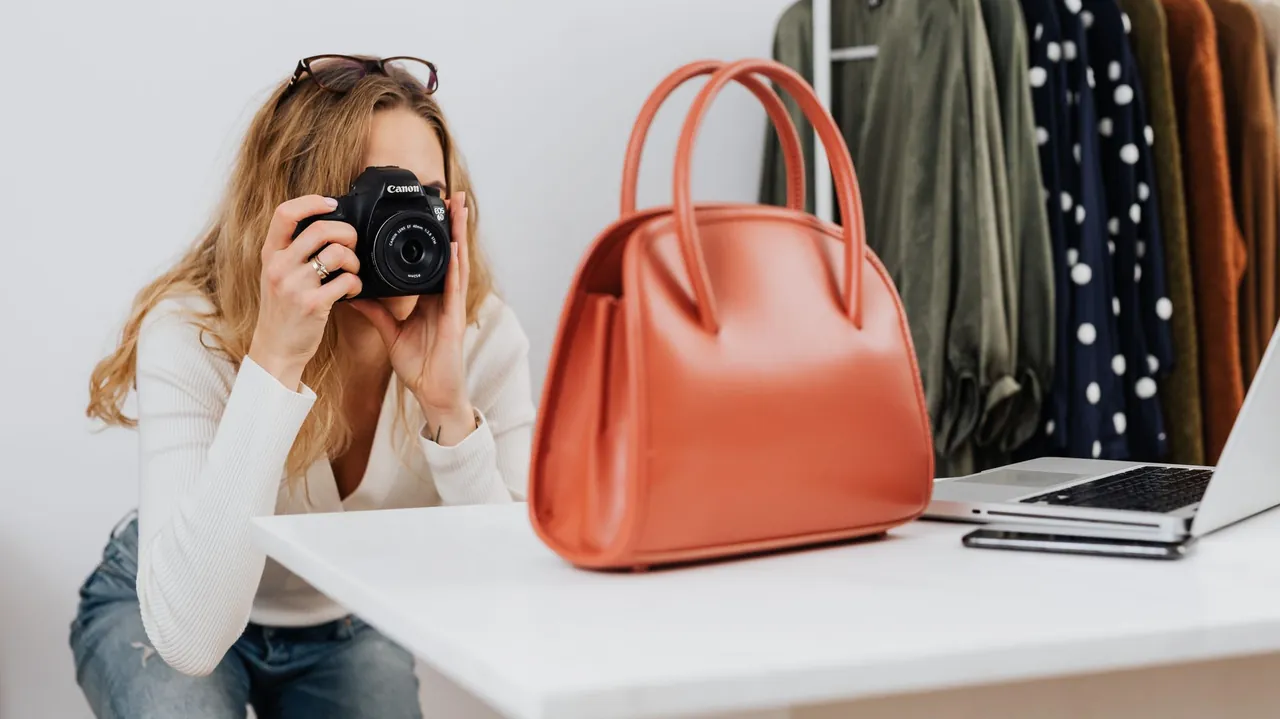
Every e-commerce store runs on the same bottleneck: product photos cost money, take time, and go stale the moment the catalog changes. A new colorway means a new shoot. A seasonal campaign needs a new lifestyle scene. A dropshipper rotating 40 SKUs a week can't afford studio time for any of them — which is exactly why AI image generation for ecommerce is now the fastest-growing line item in agency pitches.
You generate product imagery in minutes instead of booking studio days, and for an agency it's a service with real margin — not a novelty. Here's what actually works, what the limits are, and how to package it for clients.
Where AI image generation for ecommerce actually fits
Not every product shot should be AI-generated, and any agency that says otherwise is overselling. The highest-value, lowest-risk applications are:
- Lifestyle and context shots — a sofa in a furnished room, a jacket on a model, a watch on a wrist. These cost the most to shoot and are the easiest to generate believably.
- Colorway and variant swaps — change the color of a product while keeping the composition, instead of re-shooting.
- Background replacement — neutralize or swap a cluttered scene for a clean studio backdrop, consistently across a whole catalog.
- Concept and mood testing — generate variations before a real shoot so the client only pays to shoot what actually works.
- Missing catalog coverage — fill gaps for products that don't have photos yet.
The inventory catalog itself? Keep your real photography for that. Core SKU hero shots on white are cheap to shoot at volume, and buyers trust the actual product. Use AI for everything around the core, not the core itself.
The cost math clients respond to
Here's the pitch that lands: a single studio product shoot runs $100–$400 per image once you count the photographer, the location, and retouching. An AI product-photography tool runs in cents per image with a self-hosted platform or a per-image wrapper.
The savings compound when the catalog is large. That's the same one-time-vs-recurring math that makes self-hosted AI image generation the right call at scale — you pay once for the platform instead of paying per image forever. For a 200-SKU catalog, the shoot budget gets cut by most of the way while keeping the hero shots real.
But you still pay someone to run it. The deliverable is a service, not a button. Client integration, prompt consistency, quality control, and a working turnaround define the value — which brings us to the process.
A repeatable pipeline for product imagery
Steal agency work to productized work. To make this a service rather than a one-off trick, fix the process:
- Inventory and brief — pull the product list, tag each SKU with the shot types it needs (hero, lifestyle, variant, background swap).
- Standardize prompts — lock a prompt template that holds brand colors, style, and composition so the output feels consistent across the whole catalog.
- Generate in batches — queue the work instead of running it one at a time. Batch generation is how you hit 50 images in an afternoon rather than all week.
- Quality gate — a human reviews every image. AI is fast; it's not flawless. Anomalies (wrong number of fingers, melted geometry) get culled before the client sees anything.
- Deliver and iterate — hand over the finished set, learn from what the client asked to fix, and tighten the prompt templates for the next round.
If any of this feels like a platform problem rather than a prompt problem — queuing, account management, high volume — that's exactly what a self-hosted image platform is for, and for a client with a big catalog it's the difference between a sideline and a service.
The agency angle: a service clients will pay for monthly
The recurring play is a bundle. Product-feature pages, weekly lifestyle shots for social, seasonal campaigns, and full-catalog background consistency all fit in a monthly retainer. It's the same logic as offering AI image generation to your clients and white-label AI image generation for agencies, but aimed squarely at retail and DTC clients who already have a shoot line-item they'd rather cut — or at print on demand sellers who need catalog-scale design output.
Price it as a monthly package tied to image volume, not as an hourly shoot. That's easier for the client to approve and predictable for you to run.
The tooling reality
None of this works with the Discord chat UI. You need programmatic access to generate, queue, and review at volume — the same async job problem developers solve with a Midjourney API. For the product-photography angle, see the AI product photography pipeline. The agency version of that is a platform you own, with your branding on the output instead of someone else's watermark on the workflow.
You don't need your own GPUs to start. Start with the pipeline on what you have, prove the ROI with the first catalog, and grow into the self-hosted setup when volume makes the math obvious.
Not affiliated
Nextjourney is an independent image generation platform. We are not affiliated with Midjourney or Discord.
Ready to offer image generation?
Full source code — backend, frontend, REST API, admin dashboard. One-time license from $399, white-label at $1,499.
See pricing